Object Status:
Unlocated
Accession Date:
By 1826
Primary Source Reference:
Bonaparte, C. L. (1833) American ornithology, or, The natural history of birds inhabiting the United States, not given by Wilson : with figures drawn, engraved, and coloured, from nature, vol. 4, p. 59, plate 24. / https://search.library.wisc.edu/digital/AFKPEJIASN54OC8L/pages/A6G3ICY7…
Additional Source Text:
Charles Lucien Bonaparte (1803-57) wrote, in “Additions to the Ornithology of the United States; and Observations of the Nomenclature of certain species”, Annals of the Lyceum of Natural History of New York, vol. 2 (read on 6 November 1826, published 1828: 158-161): “…[it is] somewhat unsettled, the important point, whether Phalaropus Wilsonii, Sabine, was really a new species, or an undescribed state of Ph. hyperboreus. Lath. Though perfectly satisfied that the former was the case, we merely advanced it as an opinion, partly because Mr. [George] Ord [1781-1866], who had studied the subject, thought otherwise, and especially because we had no specimen of Ph. hyperboreus to compare with the Ph. Wilsonii to establish the fact beyond the possibility of doubt. Having since had the good fortune to obtain two North American specimens of the true Ph. hyperboreus, we have had the pleasure to find our conjectures perfectly well grounded, and thus to add a third species of Phalaropus to the Ornithology of these States, which thus comprises all the species that have hitherto been well ascertained.” / https://www.biodiversitylibrary.org/item/54039#page/168/mode/1up
Bonaparte (1826: 160) also wrote: “Mr. Ord lately published a new edition of the ninth volume, (and under a new title) in which, whilst with the exception of the plates, he settled by good descriptions the species he had in view, he applied to the present the name of Ph. lobatus, Ord. nec Lath., thinking it was the Tringa lobata of Linnè, though not Ph. lobatus of Latham; and his numerous synonyms, and the criticisms upon former authors based upon them, are all incorrect, as they properly relate to the Ph. hyperboreus.” / https://www.biodiversitylibrary.org/item/54039#page/170/mode/1up
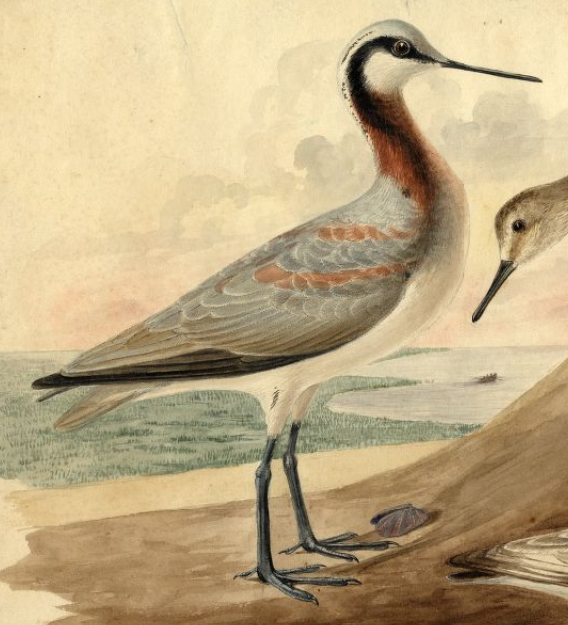
Bonaparte (1833: 59) published the species under the name "Wilson's Phalarope / Phalaropus Wilsonii" in his continuation of American Ornithology…, vol. 4 (Pl. 24, 25) and cited “Philadelphia Museum, adult”. Bonaparte’s (1833) plate, showing a “female in the perfect plumage of spring”, was based on a drawing by Titian Ramsay Peale (1799-1885), engraved by Alexander Lawson (ca.1772-1846). / https://search.library.wisc.edu/digital/AFKPEJIASN54OC8L/pages/A6G3ICY7…
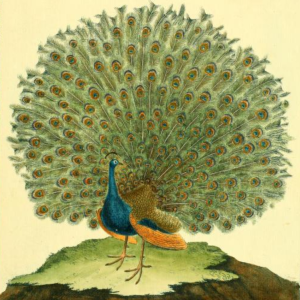
Titian's preparatory drawing (shown here) is extant in the American Philosophical Society Library (Mss.B.P31.15d). / https://diglib.amphilsoc.org/islandora/object/three-birds%3A-1-wilsons-…
Notes:
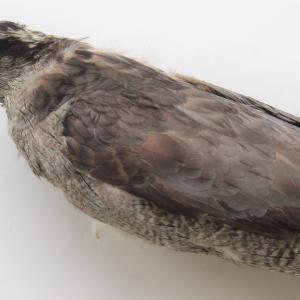
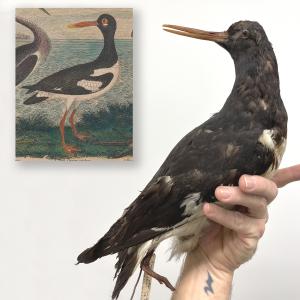
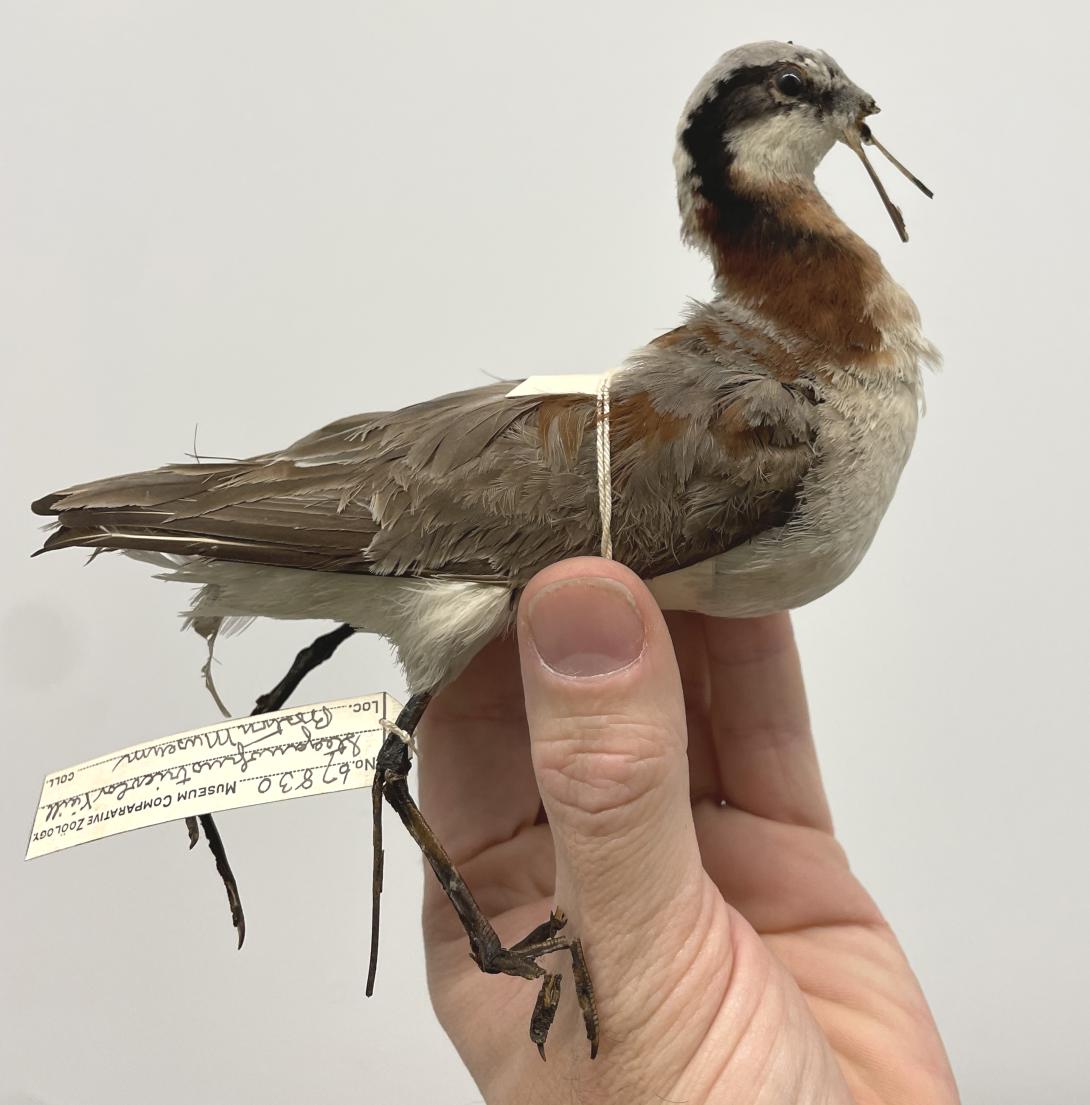
After Peale's Museum closed, a portion of Peale's bird collection was purchased in 1850 by Moses Kimball (1809–95), who displayed it at his "Boston Museum". An advertisement in the Boston Transcript, printed 1 October 1850, stated that Kimball had acquired "One Half of the celebrated Peale's Philadelphia Museum". The other half of Peale's birds had been sold to the circus promoter P. T. Barnum (1810–91) and would be subsequently destroyed in a fire at his "American Museum" in New York City in July 1865. When the Boston Museum closed, Kimball's Peale remnants passed temporarily to the Boston Society of Natural History, who disposed of them to Charles J. Maynard (1845-1929), a local taxidermist. The specimens were stored in a barn in Massachusetts for several years, then eventually were deposited at the Museum of Comparative Zoology (MCZ), Harvard University. By the time the collection was catalogued by Walter Faxon (1848-1920) at MCZ, in 1914, in virtually every case the original mounts and labels had been disassociated from the specimens, and an untold number were lost. Walter Faxon, "Relics of Peale's Museum," Bulletin of the Museum of Comparative Zoology, 59, no. 3 (July 1915): 133, speculated about the provenance of MCZ 67830 (shown here), a data-deficient specimen from the Boston Museum collection: "Wilson saw but one specimen of this Phalarope, in Trowbridge's Museum, Albany, [New York]. He left after his death an imperfect sketch and description of this specimen which were published by [George] Ord ... as 'Phalaropus lobata.' In the second edition of the ninth volume ... Ord added a fuller description of a new specimen in Peale's Museum, shot by [Titian] R. Peale near Philadelphia, May 7, 1818. In 1833 Bonaparte described the same specimen again and gave a coloured figure of it ... under the name Phalaropus wilsoni Sabine. I am convinced that the specimen in the Boston Museum collection [MCZ 67830] is the one described by Ord and Bonaparte. Its bill unluckily has been badly shattered." / https://www.biodiversitylibrary.org/page/6339801#page/182/mode/1up As Faxon noted, Alexander Wilson (1766-1813) had seen a specimen of this (as yet undescribed) species at in the Trowbridge collection in Albany, New York, which he evidently sketched, and wrote a brief description. After Wilson's death, the drawing and description were examined by Ord, editor of the final (9th) volume of American Ornithology, which was published posthumously (Wilson 1814). Ord included the species under the name “Gray Phalarope / Phalaropus lobata” and wrote: “Of this species only one specimen was ever seen by Mr. Wilson … in referring to Mr. Wilson’s journal [now missing] I found an account of the bird, there called a Tringa, written with a lead pencil, but so scrawled and obscured that parts of the writing were not legible. I wrote to Mr. Trowbridge, soliciting a particular description, but no answer has been returned.” / https://www.biodiversitylibrary.org/item/175518#page/78/mode/1up Around 1823-24, when Ord was preparing to publish a second edition of American Ornithology, of which the 9th volume (containing the phalaropes) would bear a new title, Supplement to the American ornithology of Alexander Wilson (1825), he took a copy of the original pressing (Wilson 1814) and marked it up with ink, making edits to the original copy and adding footnotes. This copy, from which many pages have been torn out, is now preserved in the Academy of Natural Sciences of Drexel University (ANSP) Archives (coll. 280). To the Editor's (MRH) knowledge, it has not been discussed in literature heretofore. This was evidently Ord's first editorial pass, because not every edit made it into the final version (i.e., the text of the Supplement..., 1825). To the original 1814 account of “Gray Phalarope / Phalaropus lobata” (p. 72), Ord first added “-us” and a question mark, so that the scientific name would read "Phalaropus lobatus?". Then, he changed his mind and replaced it with "hyperboreus?". He also changed the name "Gray Phalarope" to "Brown Phalarope" and added a footnote, which read: "Named in the plate Gray Phalarope". In his text, Ord also made the following edit: “I have concluded that this species is the Gray Brown Phalarope of Turton authors” (ANSP Archives, coll. 280). Thus, having never seen the specimen himself, Ord was not convinced that it was a new species. In the final publication (i.e., the Supplement… 1825: 232), the English name alteration (i.e., gray to brown) and its explanatory footnote were included, but Ord reverted to “Phalaropus lobatus” for the scientific name. / https://www.biodiversitylibrary.org/item/227703#page/238/mode/1up
Specimen Type:
Dead/preserved
Current Common Name:
Wilson's Phalarope
Current Scientific Name
Scolopacidae | Phalaropus tricolor
Repository:
Museum of Comparative Zoology, Harvard University (MCZ 67830)