Object Status:
Extant
Accession Date:
By 1799
Primary Source Reference:
Charles Willson Peale, Lecture on Natural History 17. (ca. 1799). Academy of Natural Sciences of Drexel University Archives, coll. 40. / https://ansp.org/research/library/archives/0000-0099/coll0040/
Additional Source Text:
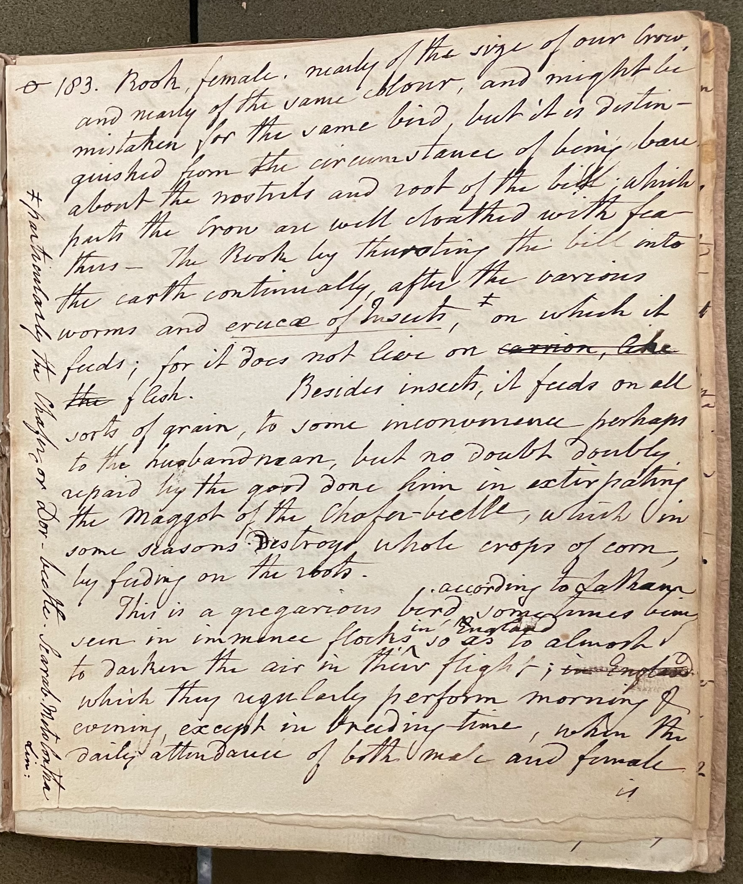
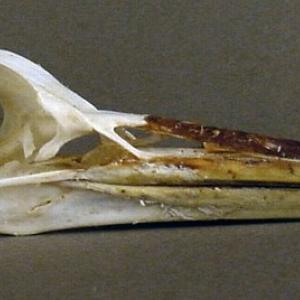
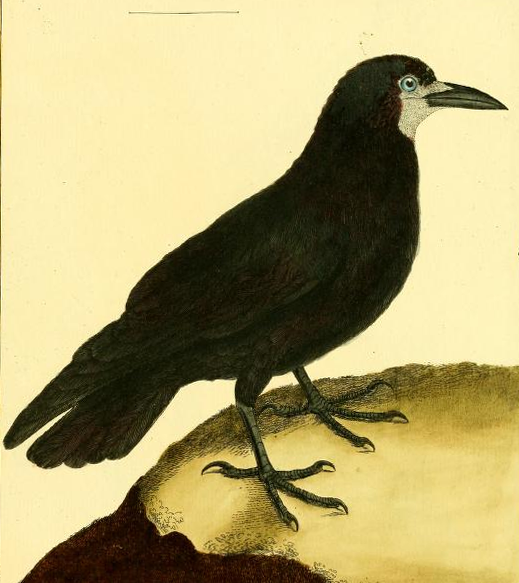
Charles Willson Peale (1741-1827) wrote, in his 17th Lecture (ca. 1799): "No. 183. Rook, female, nearly of the size of our Crow, and nearly of the same colour, and might be mistaken for the same bird, but it is distinguished from the circumstance of being bare about the nostrils and rest of the bill, [on] which parts the crow are well cloathed with feathers. The Rook by thrusting the bill into the earth continually after the various worms and crucae of Insects, particularly the Chafen, or Dor-Beetle Scarab […] Linn., on which it feeds; for it does not live on flesh. Besides insects, it feeds on all sorts of grain, to some inconvenience perhaps to the husbandman, but no doubt doubly repaid by the good done him in extirpating the Maggot of the Chafer-beelte, which in some seasons destroys whole crops of corn, by feeding on the roots." (Academy of Natural Sciences of Drexel University Archives, coll. 40)
Peale continued: "This is a gregarious bird, according to Latham, sometimes being seen in immense flocks in England so as to almost darken the air in their flight, which they regularly perform morning & evening, except in breeding time, when the daily attendance of both male and female is required for feeding the young; for it is observed they do it by turns. As these birds are apt to form themselves into societies, such places as they frequent during the breeding-time are called rookeries, and they generally coose a large clump of the tallest tree for this purpose, but make so great a litter and such a perpetual chatter, that nothing but habit, and a length of time, can reconcile one to the noise. The young birds are accounted good eating, and that even the old ones are tolerable food when fat, but this is very rare. Commonly cooked into pies in England. Corvus frugilegus Linn. Le Freux, ou la Frayonne Buff. pl. enl. 484." (ANSP Archives, coll. 40)
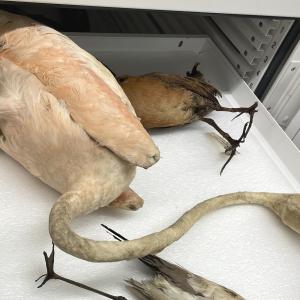
Peale wrote, in "A Walk Through the Philad[elphi]a Museum" (1805–1806): "The Rook (Corvus frugilegus) belongs to Europe, may be easily distinguished from our Crows by that nakedness between the bill & Eyes." (Historical Society of Pennsylvania, coll. 0481)
Specimen Type:
Dead/preserved
Current Common Name:
Rook
Current Scientific Name
Corvidae | Corvus frugilegus