Object Status:
Extant
Accession Date:
By 1799
Primary Source Reference:
Charles Willson Peale, Lecture on Natural History 19. (ca. 1799). Academy of Natural Sciences of Drexel University Archives, coll. 40. / https://ansp.org/research/library/archives/0000-0099/coll0040/
Additional Source Text:
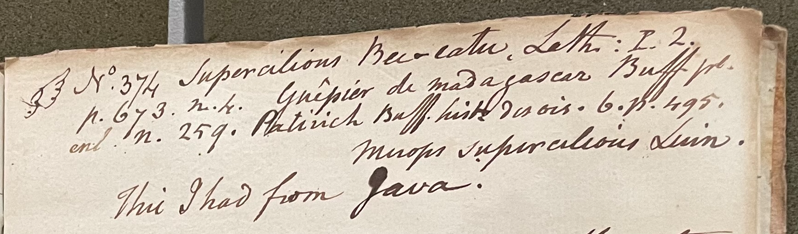
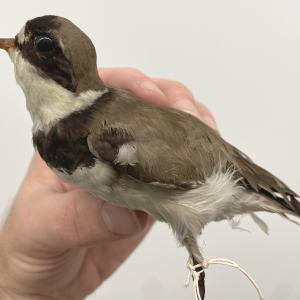
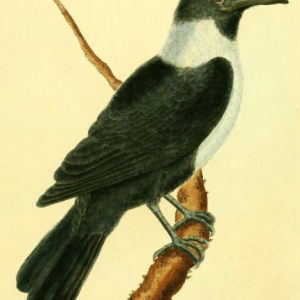
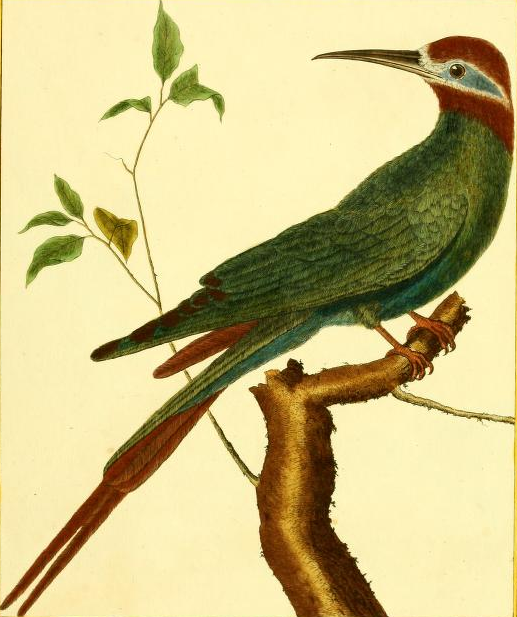
Charles Willson Peale (1741-1827) wrote, in his 19th Lecture (ca. 1799): "374. Supercilious Bee-eater. Latham. I. 2. p. 673. n. 4. Guêpier de Madagascar Buff. pl. enl. n. 259. Patirich Buff. hist. des ois. 6. p. 495. Merops supercilious Linn. This I had from Java." (Academy of Natural Sciences of Drexel University Archives, coll. 40)
Notes:
If Peale’s specimen was in fact a close resemblance to Buffon’s “Guêpier de Madagascar," then he must have been misinformed of its origin because the range of this species is restricted to eastern Africa—along the shipping route from Java to Philadelphia. The editor (MRH) has been unable to confirm the source of Peale’s specimens from Java, Indonesia, but there is ample reason to suspect that he received them from Thomas Horsfield (1773-1859), the physician and naturalist. In 1799, Horsfield, who was born and raised in southeast Pennsylvania, and educated at the University of Pennsylvania, took a medical post on the merchant ship China, which sailed to Java. He remained there until 1819, during which time he collected specimens on behalf of Sir Thomas Stamford Bingley Raffles (1781-1826), governor of the Dutch East Indies. In January 1799, before he left for Java, Horsfield visited Peale’s Museum and purchased a ticket “for the year 1799 which intitles [sic] the Purchaser to the use of the Museum every day while the Sun is above the Horizon. Each Ticket [cost] two Dollars.” His signature (“Thos. Horsfield”) appears in a Peale Museum Subscription Book (Historical Society of Pennsylvania, coll. 0481). / https://en.wikipedia.org/wiki/Thomas_Horsfield
Specimen Type:
Dead/preserved
Current Common Name:
Olive Bee-eater
Current Scientific Name
Meropidae | Merops superciliosus