Object Status:
Unlocated
Accession Date:
By 1799
Primary Source Reference:
Charles Willson Peale, Lecture on Natural History 25. (ca. 1799). Academy of Natural Sciences of Drexel University Archives, coll. 40. / https://ansp.org/research/library/archives/0000-0099/coll0040/
Additional Source Text:
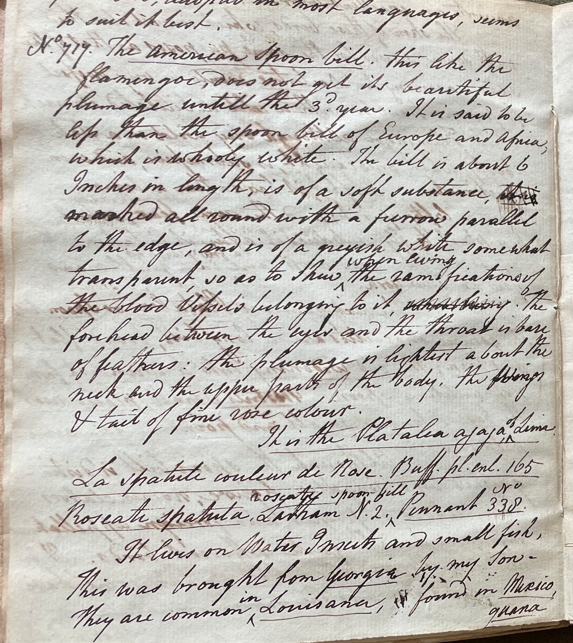
Charles Willson Peale (1741-1827) wrote, in his 25th Lecture (ca. 1799): "No. 717. The American Spoon Bill. this like the flamingoe, does not get its beautiful plumage until the 3d. year. It is said to be less than the spoonbill of Europe and Africa, which is wholly white. [This statement is evidence that Peale had not yet acquired a specimen of Eurasian Spoonbill, P. aleucorodia, when he wrote Lecture 25]. The bill is about 6 Inches in length, is of a soft substance, marked all round with a furrow parallel to the edge, and is of a greyish white somewhat transparent, so as to shew when living the ramifications of blood vessels belonging to it. The forehead between the eyes and the throat is bare of feathers; the plumage is lightest about the neck and the upper parts of the body. The wings & tail of fine rose colour. It is the Platalea ajaja of Linn. Le spatula couleur de Rose. Buff. pl. enl. 165. Roseate Spatula Latham No. 2. Roseate Spoon-bill Pennant No. 338. It lives on Water Insects and small fish. This [specimen] was brought from Georgia by my son. They are common in Louisiana, found in Mexico, Guiana, Brasil, and in Jamaica, and the greater Antilles. They are eatable." (Academy of Natural Sciences of Drexel University Archives, coll. 40)
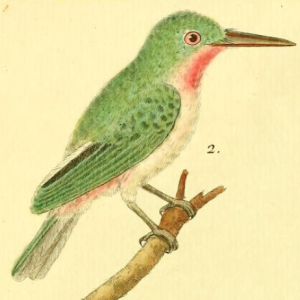
Peale continued: "There is one which inhabits Surinam and Guiana no bigger than a sparrow. The bill is not round like this, but of Rhomboidal form. It must be a curious bird. I hope in some future time to be able to treat you with the sight of one of them. There is also another bird belonging to that fertile country, which is called the Screamer [i.e., Horned Screamer, Anhima cornuta], from its loud screaming voise; it is about the size of a Turkey, and has a slender horn on the top of its head, 3 Inches in length. I regret the more that I cannot produce that bird from a particular trait of its character–they always are met with in pairs, and if one dies, the other mourns to death for the loss. The elegant Buffon describes it thus: "It seems even to have a gentle and feeling disposition; for the male and female keep constantly togather. Love binds their affections by an indisposable chain; if one happens to die, the survivors can harly support the loss of its companion; it wanders, perpetually moaning, and consumes the wretched remainder of its life near the scenes of tender recollection and of past joys." (ANSP Archives, coll. 40)
Alexander Wilson (1766-1813) described this species under the name "Roseate Spoonbill / Platalea ajaja" in American Ornithology vol. 7 (Pl. 63), where "Peale's Museum, No. 3553" was cited (Wilson 1813: 123). / https://www.biodiversitylibrary.org/item/175507#page/145/mode/1up (text) / https://www.biodiversitylibrary.org/item/175507#page/144/mode/1up (plate)
Notes:
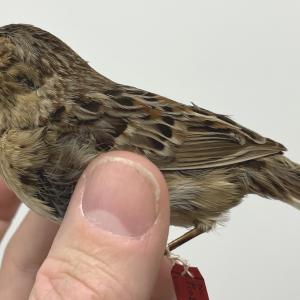
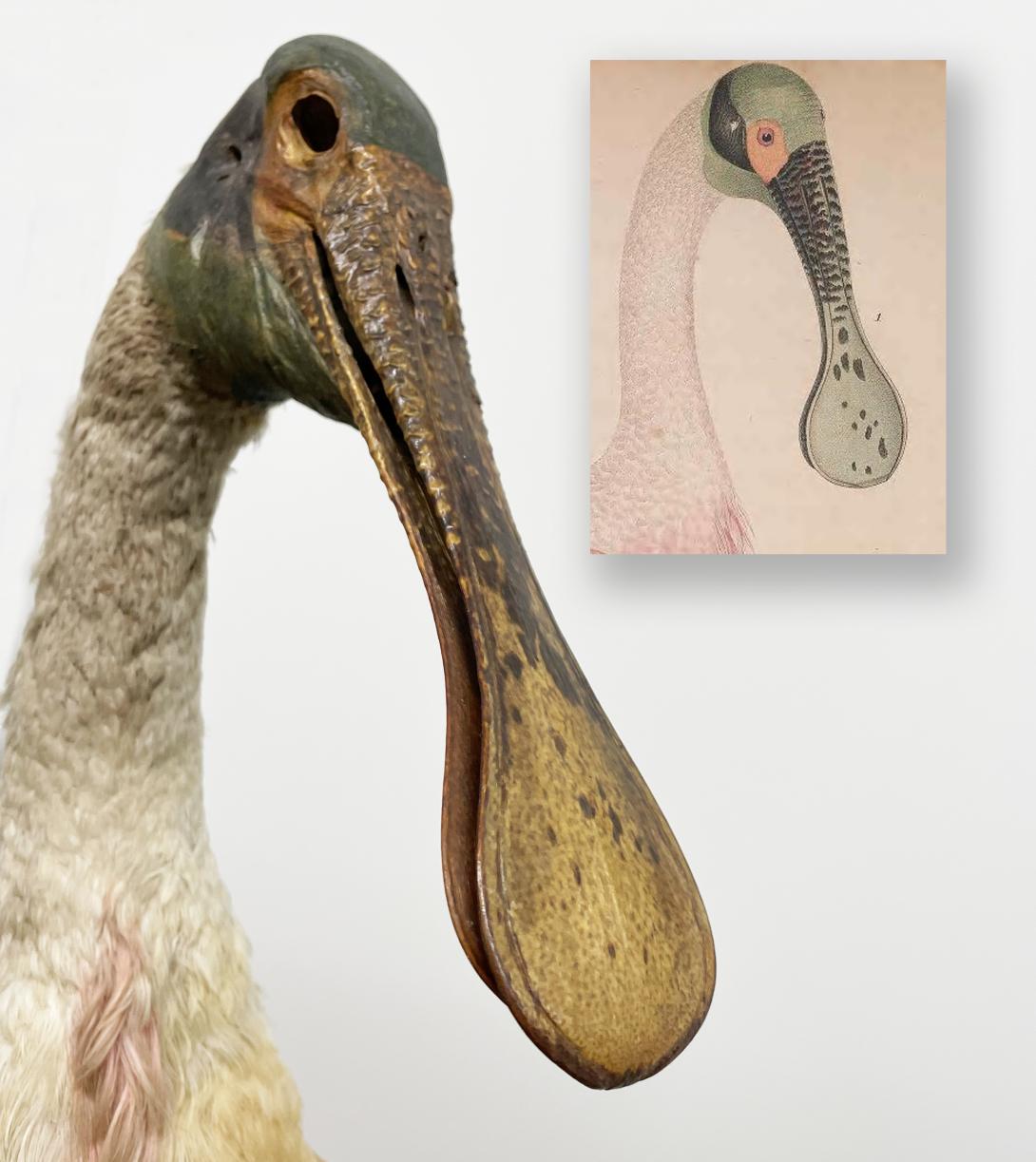
Wilson (1813: 123) wrote: "the specimen from which the figure in the plate was drawn having been sent me from the neighborhood of Natchez [Mississippi], in excellent order; for which favour I am indebted to the family of my late benevolent and scientific friend William Dunbar, esq. of that territory. It is now deposited in Mr. Peale's museum." After Peale's Museum closed, a portion of Peale's bird collection was purchased in 1850 by Moses Kimball (1809–95), who displayed it at his "Boston Museum". An advertisement in the Boston Transcript, printed 1 October 1850, stated that Kimball had acquired "One Half of the celebrated Peale's Philadelphia Museum". The other half of Peale's birds had been sold to the circus promoter P. T. Barnum (1810–91) and would be subsequently destroyed in a fire at his "American Museum" in New York City in July 1865. When the Boston Museum closed, Kimball's Peale remnants passed temporarily to the Boston Society of Natural History, who disposed of them to Charles J. Maynard (1845-1929), a local taxidermist. The specimens were stored in a barn in Massachusetts for several years, then eventually were deposited at the Museum of Comparative Zoology (MCZ), Harvard University. By the time the collection was catalogued by Walter Faxon (1848-1920) at MCZ, in 1914, in virtually every case the original mounts and labels had been disassociated from the specimens, and an untold number were lost. Walter Faxon, "Relics of Peale's Museum," Bulletin of the Museum of Comparative Zoology, 59, no. 3 (July 1915): 130, speculated that MCZ 67826, a data-deficient specimen from the Boston Museum collection (shown here), was the specimen illustrated by Wilson: “Even the artificial colors on the bill and bare parts of the head are copied in [Wilson's] figure. This specimen (Peale Mus. No. 3553) was killed in the neighborhood of Natchez, Tenn." Faxon's claim is plausible because the spot pattern on the bill surface is a decent match for Wilson's bird. However, Peale evidently had a specimen of this species in the Philadelphia Museum by 1799, before Wilson began his ornithological studies, and there is no original data with MCZ 67826 stating that it was associated with Wilson or Dunbar.
Specimen Type:
Dead/preserved
Current Common Name:
Roseate Spoonbill
Current Scientific Name
Threskiornithidae | Platalea ajaja
Repository:
Museum of Comparative Zoology, Harvard University (MCZ 67826)