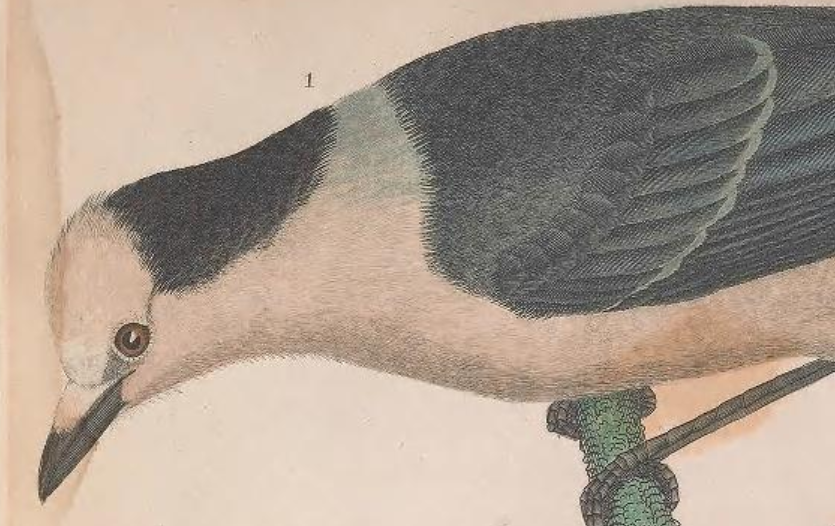
Object Status:
Extant
Accession Date:
By 26 March 1805
Primary Source Reference:
Alexander Wilson (1766-1813), letter to William Duncan dated 26 March 1805 (transcribed in Hunter 1983: 236, The Life and Letters of Alexander Wilson, Philadelphia: American Philosophical Society).
Additional Source Text:
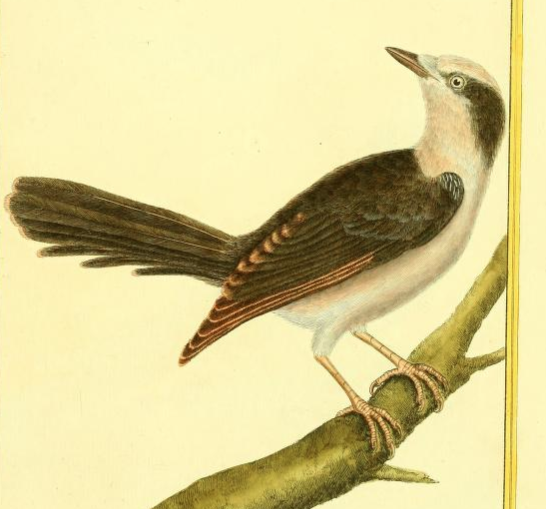
After he collected a specimen of this species near the Mohawk River in New York, Alexander Wilson (1766–1813) wrote to his friend William Duncan on 26 March 1805: "The Jay I presented to Mr. Peale, at his request; and it is now in the Museum" (Hunter 1983: 236, Life and Letters of Alexander Wilson, Philadelphia: American Philosophical Society).
However, this specimen may have been lost or destroyed because, in another letter, dated 12 September 1810 and addressed to his colleague John Gardiner, Wilson implied that his original specimen was no longer available: "This bird is called the Canada Jay—I am extremely desirous of procuring a specimen. If it visits you it must be only in winter." (Hunter 1983: 379)
Wilson described this species under the name "Canada Jay / Corvus canadensis" in American Ornithology vol. 3 (Pl. 21) - without citing a specimen in Peale's Museum. / https://www.biodiversitylibrary.org/item/175516#page/43/mode/1up (text) / https://www.biodiversitylibrary.org/item/175516#page/42/mode/1up (plate)
Notes:
It is probable that Wilson’s specimen was destroyed, because, in a letter to John Gardiner dated “Philadelphia, 12 September 1810,” Wilson wrote: “And have you ever remarked a solitary bird, something less than the blue Jay, and of a rather lighter colour than the Catbird—The forehead and lower parts are of a dirty white, the back wings and tail of a dark leaden grey, the hind head is black, and the feathers on the crown are full, as if crested. This bird is called the Canada Jay—I am extremely desirous of procuring a specimen. If it visits you it must be only in winter” (Hunter 1983: 379, The Life and Letters of Alexander Wilson, Philadelphia: American Philosophical Society).
Specimen Type:
Dead/preserved
Current Common Name:
Canada Jay
Current Scientific Name
Corvidae | Perisoreus canadensis