Object Status:
Extant
Accession Date:
By 1799
Primary Source Reference:
Charles Willson Peale, Lecture on Natural History 34. (ca. 1799). Academy of Natural Sciences of Drexel University Archives, coll. 40. / https://ansp.org/research/library/archives/0000-0099/coll0040/
Additional Source Text:
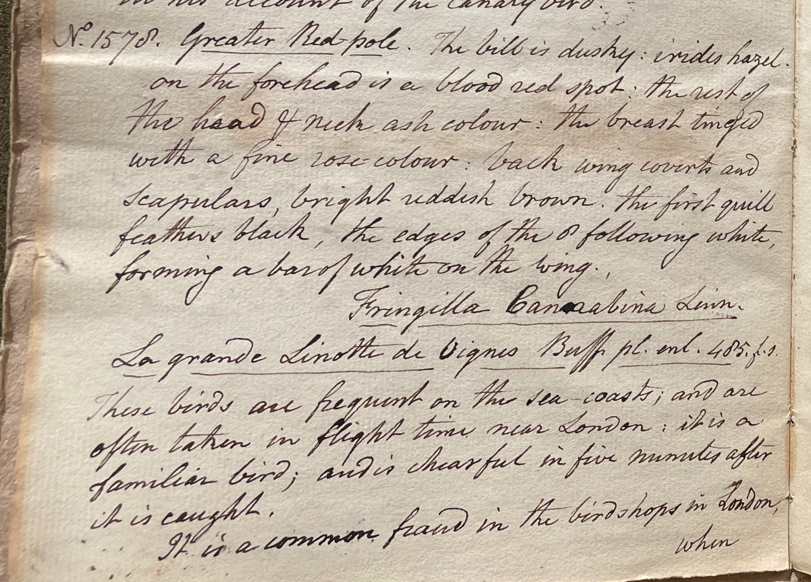
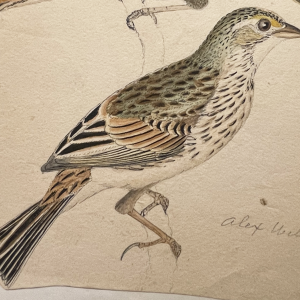
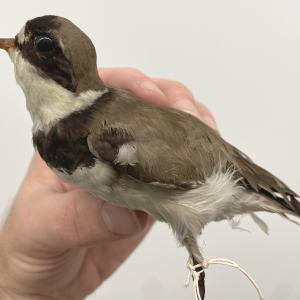
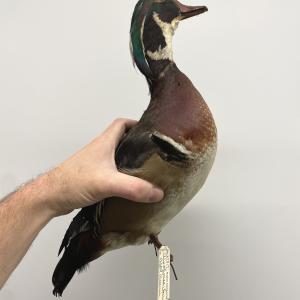
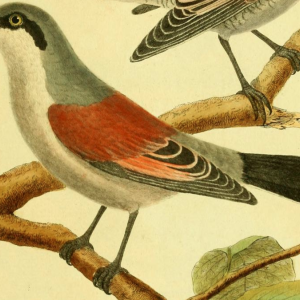
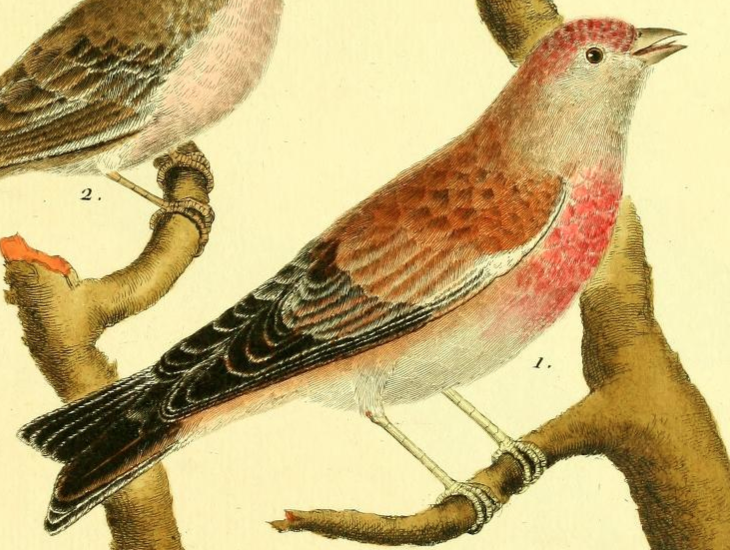
Charles Willson Peale (1741-1827) wrote, in his 34th Lecture (ca. 1799): "No. 1578. Greater Red-pole. This bill is dusky; irides hazel; on the forehead is a blood red spot; the rest of the head & neck ash colour; the breast tinged with a fine rose colour; the breast tinged with a fine rose-colour; back wing coverts and scapulars, bright reddish brown; the first quill feathers black, the edges of the 6 following white, forming a bar of white on the wing. Fringilla Cannabina Linn. La grande Linotte de Vignes Buff. pl. enl. 485. f. 1. These birds are frequent on the sea-coasts; and are often taken in flight time near London. It is a familiar bird, and is cheerful in five minumes after it is caught. It is a common fraud in the birdshops in London, when a male bird is distinguished from a female by a red breast, as in the case of this bird, to stain or paint the feathers, so that the deceit is not easily discovered, without close examination." (Academy of Natural Sciences of Drexel University Archives, coll. 40)
Specimen Type:
Dead/preserved
Current Common Name:
Common Linnet
Current Scientific Name
Fringillidae | Linaria cannabina