Object Status:
Unlocated
Accession Date:
By 1799
Primary Source Reference:
Charles Willson Peale, Lecture on Natural History 24. (ca. 1799). Academy of Natural Sciences of Drexel University Archives, coll. 40. / https://ansp.org/research/library/archives/0000-0099/coll0040/
Additional Source Text:
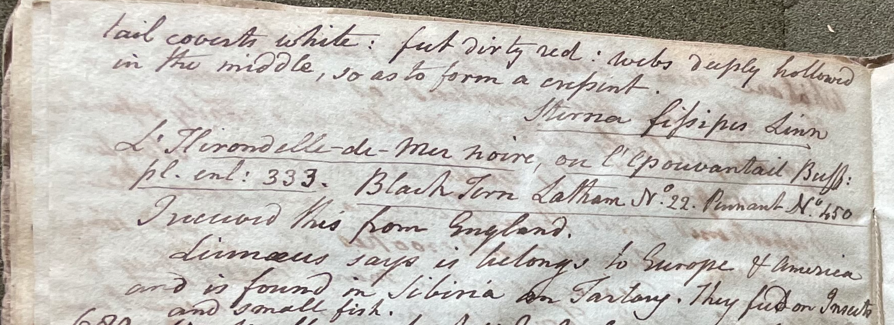
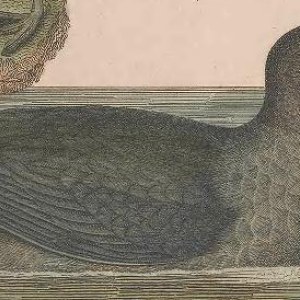
Charles Willson Peale (1741-1827) wrote, in his 24th Lecture (ca. 1799): "No. 688. Black Tern. 10 Inches long; bill black; head, neck, & breast, sooty black; tail short, exterior feathers white, the others deep ash colour; vent & under tail coverts white; feet dirty red; webs deeply hollowed in the middle, so as to form a crescent. Sterna fissipes Linn. L'Hirondelle-de-Mar noire, ou L'Epouvantail Buff. pl. enl. 333. Black Tern Latham No. 22. Pennant No. 450. I received this from England. Linnaeus says it belongs to Europe & America and is found in Sibiria [and] Tartary. They feed on Insects and small fish." (Academy of Natural Sciences of Drexel University Archives, coll. 40)
Peale wrote, in "A Walk Through the Philad[elphi]a Museum" (1805–1806): "The Black Tern (S. fissipes) they feed on Insects & small fish: this specimen is from England. Linneus says it belongs to Europe & America & is found in Siberia & Tartary." (Historical Society of Pennsylvania, coll. 0481)
Alexander Wilson (1766-1813) described an immature (apparently American) specimen of this species under the name "Short-tailed Tern / Sterna plumbea" in American Ornithology vol. 7 (Pl. 60), where "Peale's Museum, No. 3519" was cited (Wilson 1813: 83). / https://www.biodiversitylibrary.org/item/175507#page/99/mode/1up (text) / https://www.biodiversitylibrary.org/item/175507#page/91/mode/1up (plate)
Notes:
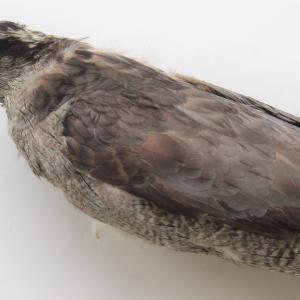
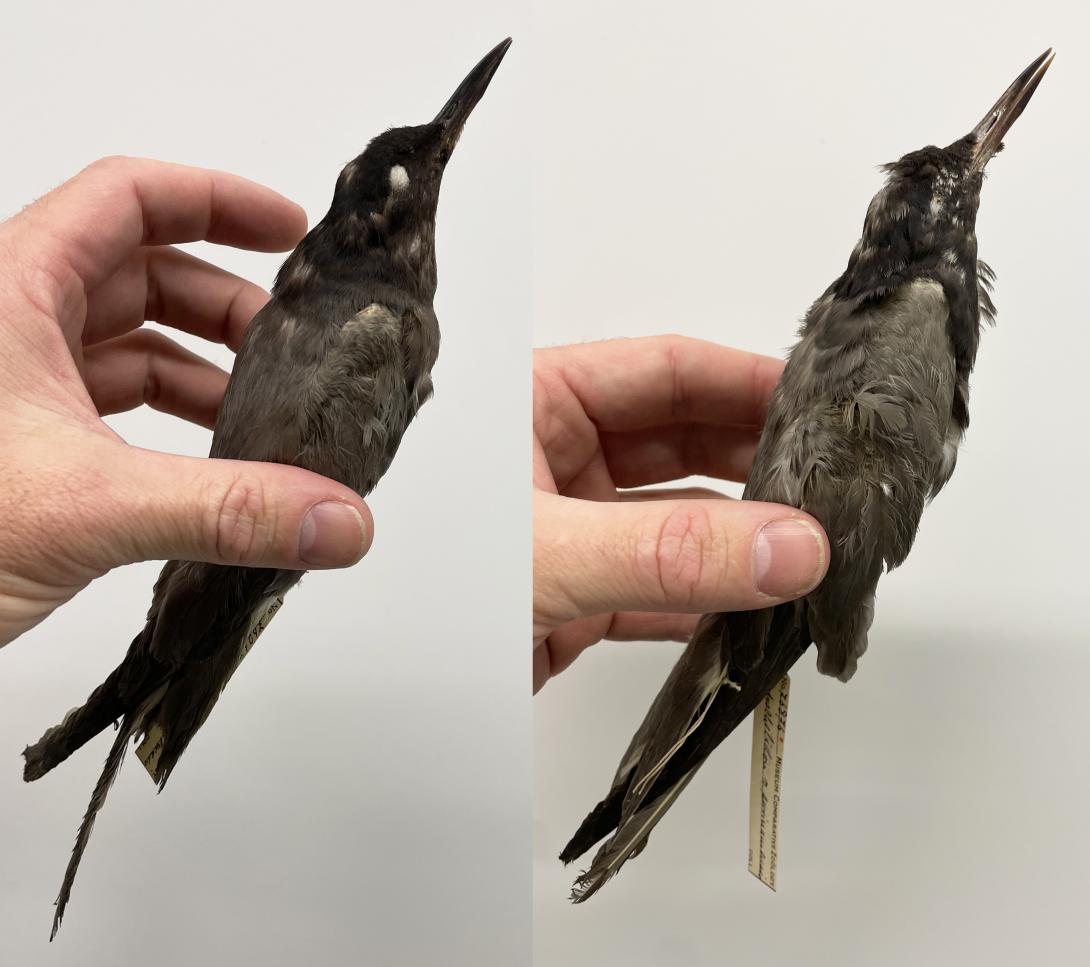
After Peale's Museum closed, a portion of Peale's bird collection was purchased in 1850 by Moses Kimball (1809–95), who displayed it at his "Boston Museum". An advertisement in the Boston Transcript, printed 1 October 1850, stated that Kimball had acquired "One Half of the celebrated Peale's Philadelphia Museum". The other half of Peale's birds had been sold to the circus promoter P. T. Barnum (1810–91) and would be subsequently destroyed in a fire at his "American Museum" in New York City in July 1865. When the Boston Museum closed, Kimball's Peale remnants passed temporarily to the Boston Society of Natural History, who disposed of them to Charles J. Maynard (1845-1929), a local taxidermist. The specimens were stored in a barn in Massachusetts for several years, then eventually were deposited at the Museum of Comparative Zoology (MCZ), Harvard University. By the time the collection was catalogued by Walter Faxon (1848-1920) at MCZ, in 1914, in virtually every case the original mounts and labels had been disassociated from the specimens, and an untold number were lost. Walter Faxon, "Relics of Peale's Museum," Bulletin of the Museum of Comparative Zoology, 59, no. 3 (July 1915), curiously failed to mention MCZ 76065 and 76876 (both shown here), which were once in the Boston Museum collection, with Pealean provenance. According to its modern label, MCZ 76065 was collected in "[North] America".
Specimen Type:
Dead/preserved
Current Common Name:
Black Tern
Current Scientific Name
Laridae | Chlidonias niger
Repository:
Museum of Comparative Zoology, Harvard University (MCZ 76065 and 76876)