Object Status:
Extant
Accession Date:
By 1799
Primary Source Reference:
Charles Willson Peale, Lecture on Natural History 24. (ca. 1799). Academy of Natural Sciences of Drexel University Archives, coll. 40. / https://ansp.org/research/library/archives/0000-0099/coll0040/
Additional Source Text:
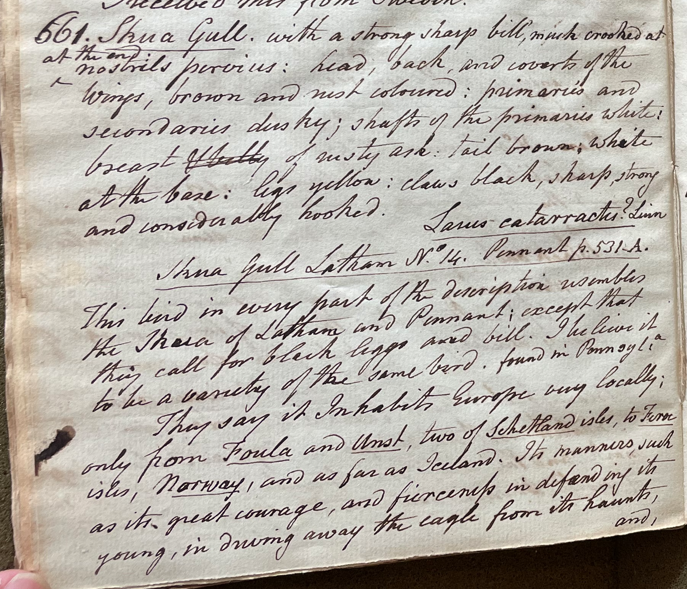
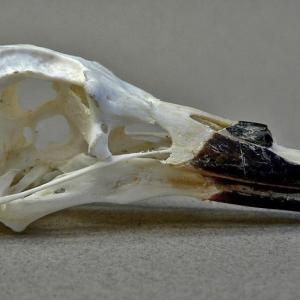
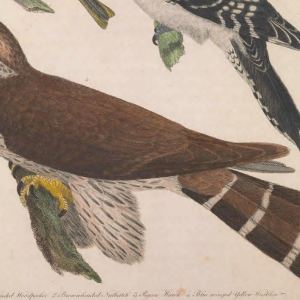
Charles Willson Peale (1741-1827) wrote, in his 24th Lecture (ca. 1799): "No. 661. Skua gull. with a strong sharp bill, much crooked at the end; nostrils pervius; head, back, and coverts of the wings, brown and rust coloured; primaries and secondaries dusky; shafts of the primaries white; breast & belly of rusty ash; tail brown, white at the base; legs yellow; claws black, sharp, strong and considerably hooked. Larus cararractus? Linn. Skua gull Latham No. 14. Pennant p. 531 A. This bird in every part of the description resembles the Skua of Latham and Pennant; except that they call for black legs and bill. I believe it to be a variety of the same bird, found in Pennsyla. They say it Inhabits Europe very locally; only from Foula and Unst, two of Schetland isles, to Ferroe isles, Norway, and as far as Iceland." (Academy of Natural Sciences of Drexel University Archives, coll. 40)
Peale continued: "Its manners, such as its great courage, and fierceness in defending its young, in driving away the eagle from its haunts, and, as it is firmly asserted by Mr. Schroter, a surgeon in the Ferre isles, its preying on the lesser water fowl, like a rapacious land bird, are fully described in the British Zoology. They abound about Port Egmont, in the Falkland Islands, and therefore stiled by navigators, Port Egmont Hens. They have been observed in many parts of the Pacific ocean, as low as lat. 36.56 south, to the east of New Zealand; and as high, in the same hemisphere, as 67.15. The navigators found them in great plenty, in the breeding season, in the latter end of December, about Christmas Sound, in Terra del Fuego, making their nests in the dry grass. They have not been remarked in other parts of the globe; nearer than the Schetlands." (ANSP Archives, coll. 40)
Specimen Type:
Dead/preserved
Current Common Name:
Unidentified Jaeger
Current Scientific Name
Laridae | Stercorarius sp.