Object Status:
Extant
Accession Date:
By 1799
Primary Source Reference:
Charles Willson Peale, Lecture on Natural History 35. (ca. 1799). Academy of Natural Sciences of Drexel University Archives, coll. 40. / https://ansp.org/research/library/archives/0000-0099/coll0040/
Additional Source Text:
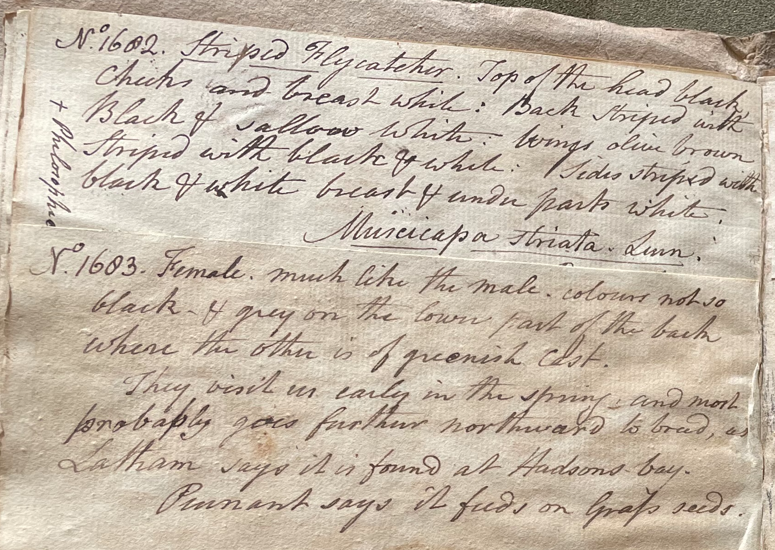
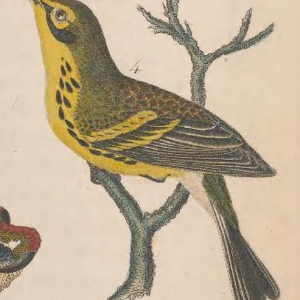
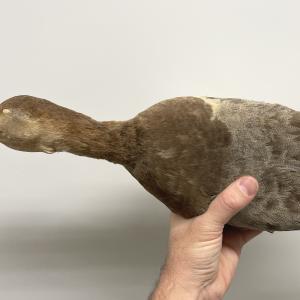
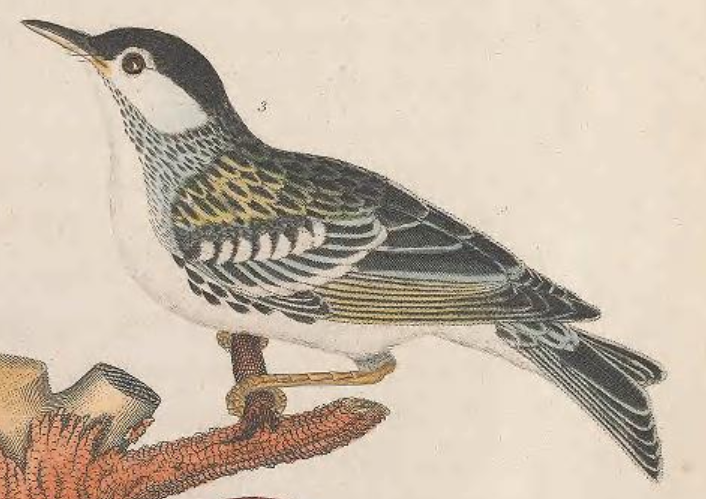
Charles Willson Peale (1741-1827) wrote, in his 35th Lecture (ca. 1799): "No. 1682. Striped Flycatcher. Top of the head black, cheeks and breast white. Back striped with Black & Sallow white; wings olive brown striped with black & white. Sides striped with black & white; breast & under parts white. Muscicapa striata. Linn. No. 1683. Female. Much like the male. Colours not so black, & grey on the lower part of the back where the other is of a greenish cast. They visit us early in the spring and most probably goes further northward to breed, as Latham says it is found at Hudson's bay. Pennant says it feeds on grass seeds." (Academy of Natural Sciences of Drexel University Archives, coll. 40)
Peale wrote, in "A Walk Through the Philad[elphi]a Museum" (1805–1806): "Striped flycatcher (M. Striata). not very common, it is found in the thick woods." (Historical Society of Pennsylvania, coll. 0481)
Alexander Wilson (1766-1813) described this species under the name "Black-poll Warbler / Sylvia striata" in American Ornithology vol. 4 (Pl. 30), where "Peale's Museum, No. 7054" is cited (Wilson 1811: 40). / https://www.biodiversitylibrary.org/item/175531#page/50/mode/1up (text) / https://www.biodiversitylibrary.org/item/175531#page/39/mode/1up (plate)
Specimen Type:
Dead/preserved
Current Common Name:
Blackpoll Warbler
Current Scientific Name
Parulidae | Setophaga striata