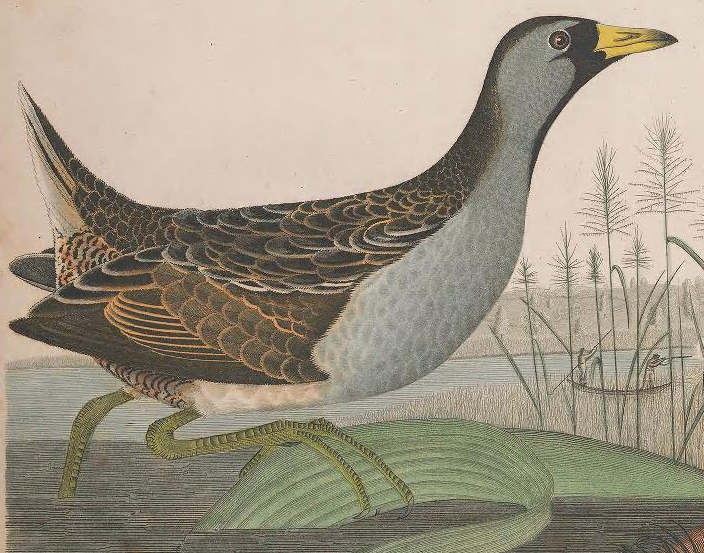
Object Status:
Extant
Accession Date:
By 1799
Primary Source Reference:
Charles Willson Peale, Lecture on Natural History 27. (ca. 1799). Academy of Natural Sciences of Drexel University Archives, coll. 40. / https://ansp.org/research/library/archives/0000-0099/coll0040/
Additional Source Text:
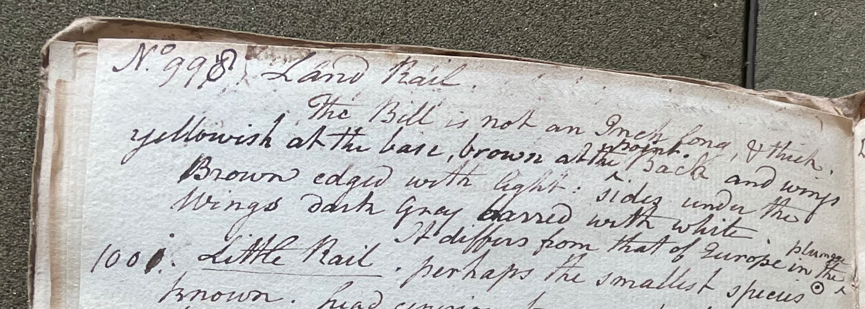
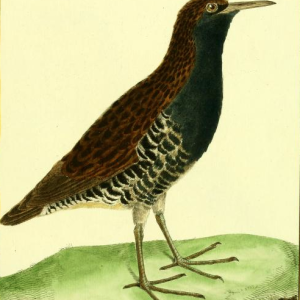
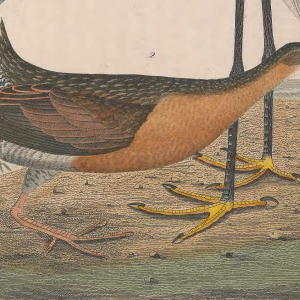
Charles Willson Peale (1741-1827) described immature and female specimens in his 27th Lecture (ca. 1799): "No. 998. Land Rail. The Bill is not an Inch long, & thick, yellowish at the base, brown at the point. Back and wings Brown edged with light. Sides under the wings dark gray barred with white. It differs from that of Europe in the […] 999. Female, much like the male, the dark parks of the plumage not so black. It is from these species that they all receive the name of Rail, from a croaking note, like a reptile. They do not love to fly, but run very fast [through] the grass of meadows; but when hunted closely, they mount strait [up] & then fly a short distance. Rale are generally esteemed for the table; some thing them equal to the Ortolan. The shortness of their wings, and their suddenly disappearing have puzzled many about their winter residence. Some have conjectured that they went into the mud & remained torpid during winter. They are said to be found from Carolina to Hudsons bay." (Academy of Natural Sciences of Drexel University Archives, coll. 40)
In "A Walk Through the Philad[elphi]a Museum" (1805–1806), Peale distinguished three species of North American rails: "The Clapper Rail (R. crepitans) is the largest species — this and the land [rail] and water rail are all we have belonging to N. America." (Historical Society of Pennsylvania, coll. 0481)
A mounted specimen of "Rallus virginianus (Va Rail)" was listed in "A Catalogue of Duplicate Specimens...", May 1822. [unpublished] American Philosophical Society Library (Mss.B.P31). This may have been this species or Virginia Rail (R. limicola).
Notes:
This species appeared under the name “Rail / Rallus virginianus” in American Ornithology vol. 6 (1812, Pl. 48), where Wilson (1812: 29) compared it to the “Land Rail of Britain” without citing any specimens in Peale’s Museum.
Specimen Type:
Dead/preserved
Current Common Name:
Sora
Current Scientific Name
Rallidae | Porzana carolina