Object Status:
Extant
Accession Date:
By 1799
Primary Source Reference:
Charles Willson Peale, Lecture on Natural History 30. (ca. 1799). Academy of Natural Sciences of Drexel University Archives, coll. 40. / https://ansp.org/research/library/archives/0000-0099/coll0040/
Additional Source Text:
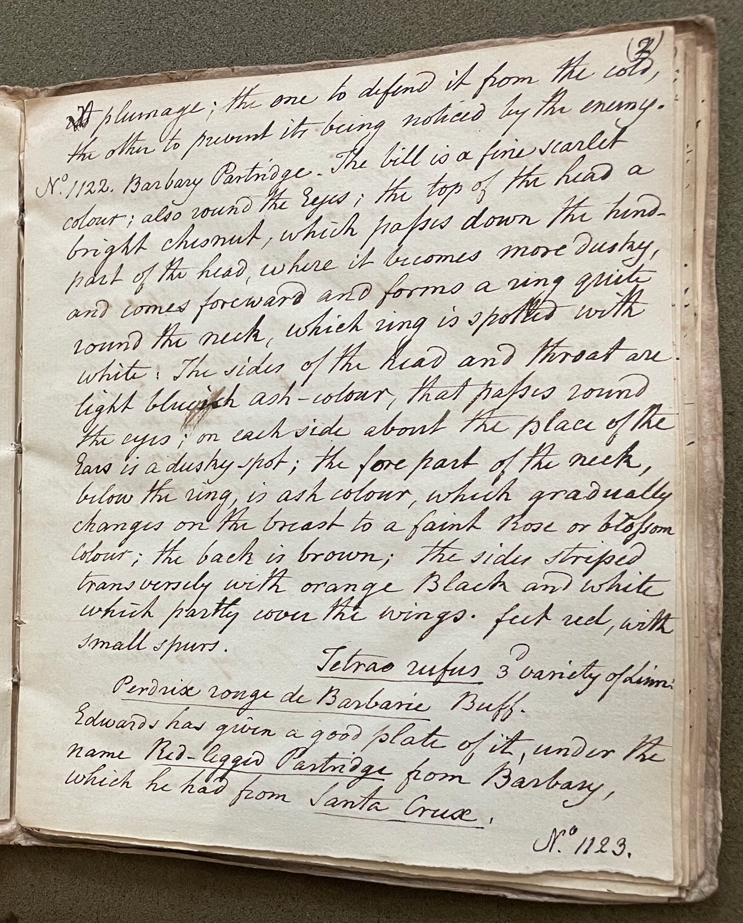
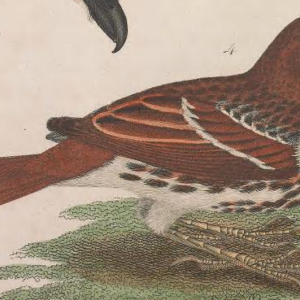
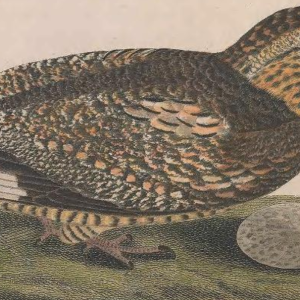
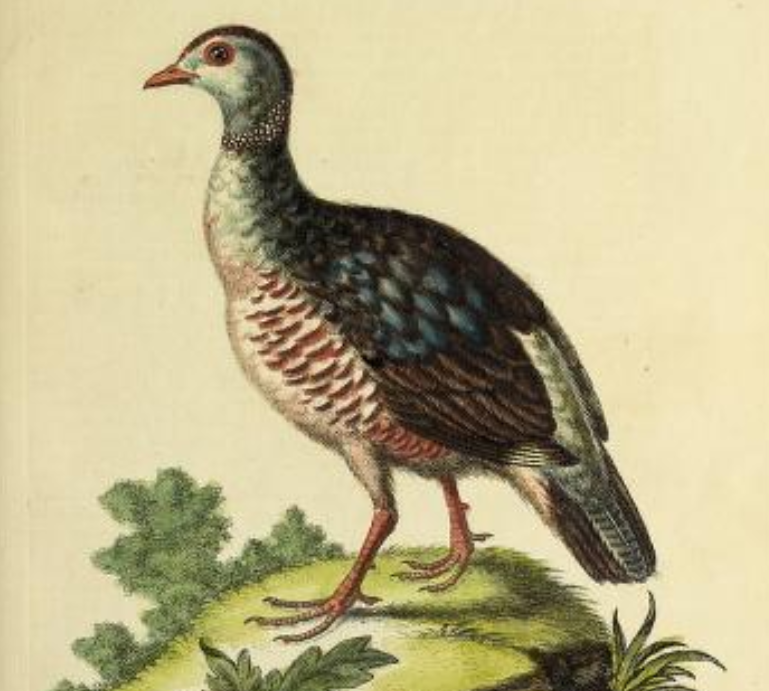
Charles Willson Peale (1741-1827) wrote, in his 30th Lecture (ca. 1799): "No. 1122. Barbary Partridge. The bill is a fine scarlet colour; also round the eyes; the top of the head a bright chesnut, which passes down the hind part of the head, where it becomes more dusky, and comes foreward and forms a ring quite round the neck, which ring is spotted with white. The sides of the head and throat are light bluish ash-colour, that passes round the eyes; on each side, about the place of the ears is a dusky spot; the forepart of the neck, below the ring, is ash colour, which gradually changes on the breast to a faint rose or blossom colour; the back is brown; the sides striped transversely with orange, black and white, which partly cover the wings; feet red, with small spurs. Tetrao rufus 3rd variety of Linn. Perdix rouge de Barbarie Buff. Edwards has given a good plate of it, under the name Red-legged Partridge from Barbary, which he had from Santa Crux." (Academy of Natural Sciences of Drexel University Archives, coll. 40)
Peale wrote, in "A Walk Through the Philad[elphi]a Museum" (1805–1806): "Partridges are distinguished by their orbits (?) being granulated: feet naked. feet are the long bones to which the toes are joined. here we find the barbary Partridge (T. Rufus) the European Partridge, and the Grey or Common Partridge, this also is found throughout Europe in the temperate parts. They are by Nature more gentle than the red; if not teazed soon becomes familiar. To save their brood they will fly off a short distance hanging their wings as if cripled, to allure the pursuit of them while the female glides through the grain or Grass with her little ones." (Historical Society of Pennsylvania, coll. 0481)
Specimen Type:
Dead/preserved
Current Common Name:
Barbary Partridge
Current Scientific Name
Phasianidae | Alectoris barbara