Object Status:
Extant
Accession Date:
By 1799
Primary Source Reference:
Charles Willson Peale, Lecture on Natural History 37. (ca. 1799). Academy of Natural Sciences of Drexel University Archives, coll. 40. / https://ansp.org/research/library/archives/0000-0099/coll0040/
Additional Source Text:
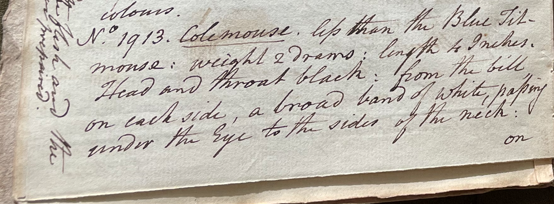
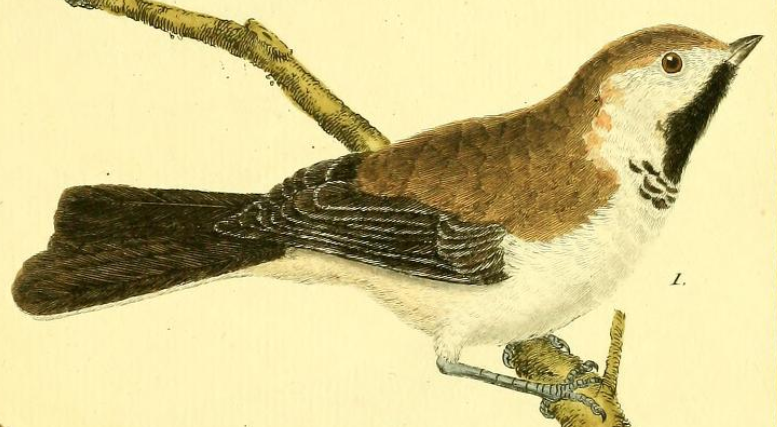
Charles Willson Peale (1741-1827) wrote, in his 37th Lecture (ca. 1799): "No. 1913. Coalmouse. Less than the Blue Titmouse; weight 2 drams; length 4 Inches. Head and throat black; from the bill, on each side, a broad band of white, passing under the Eye to the sides of the neck; on the hind head a large white spot; back, wings & tail ash colour; wings with 2 bars of dingy white; breast rufous white. Parus ater palustris Linn. La Petite Charbonniere La Mesange à gorge noire. Buff. pl. enl. 502. f. 1. Latham says, this is pretty common in woods, orchards & gardens, where it lives on the same food as the rest of the British species of this genus, and lays a number of Eggs. It is found throughout Europe, and likewise met with in America. Here we have the opportunity of comparing them … every person with a single glance of the eye will see a great difference between them." (Academy of Natural Sciences of Drexel University Archives, coll. 40)
Notes:
The American specimens of the "Coalmouse", to which Peale referred, seem likely to have been Black-capped Chickadees (Poecile atricapillus
Specimen Type:
Dead/preserved
Current Common Name:
Coal Tit
Current Scientific Name
Paridae | Periparus ater